Your visuals are honestly powerful already. The messaging, colors, and tone all feel elevated, intentional, and culturally grounded. Here’s a polished blog version that ties directly into the themes and statistics from your graphics while keeping that emotional “beauty should feel like belonging” message centered.
Beauty Should Feel Like Belonging, Not Competition
Black women have always shaped beauty culture. From trends and artistry to glam, storytelling, and influence, our impact is seen every single day across the beauty industry. Yet despite being the blueprint for so much of modern beauty culture, many darker-skinned women still feel overlooked when it comes to representation, visibility, creator opportunities, and inclusivity within the industry.
Beauty should feel expansive, authentic, and welcoming for every shade, texture, size, and style. People deserve to see themselves reflected consistently, not occasionally. But for many Black women, finding foundation shades that actually match their skin tone and undertones is still a struggle. According to industry reports, over 67% of Black consumers report dissatisfaction with beauty offerings due to lack of inclusivity and representation. At the same time, Black consumers contribute more than $10 billion annually to the beauty industry, while Black-owned beauty brands remain significantly underrepresented in major retail spaces.
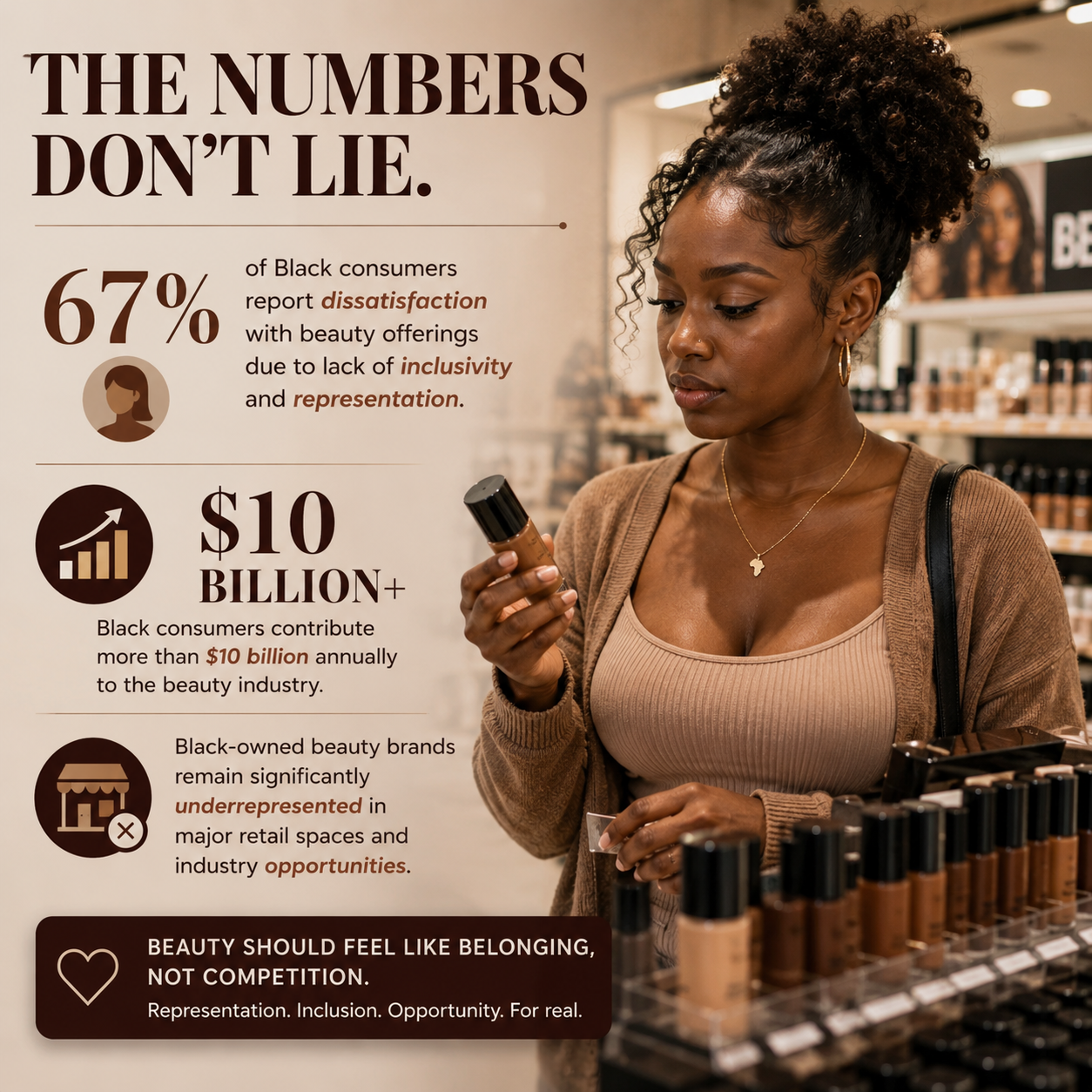
The gap extends beyond products. Black creators continue to influence beauty trends globally, yet many still receive fewer opportunities, less visibility, and unequal pay compared to their counterparts. Black culture continues to drive beauty conversations, but the creators behind the influence are too often excluded from the rooms where opportunities are created.
Maybe we were never meant to compete for space. Maybe we were meant to create our own.
The Black Beauty Network was created to celebrate, connect, and uplift Black voices in beauty while building a space rooted in community instead of comparison. Because beauty should never make people feel invisible. It should make people feel seen, valued, and like they belong.